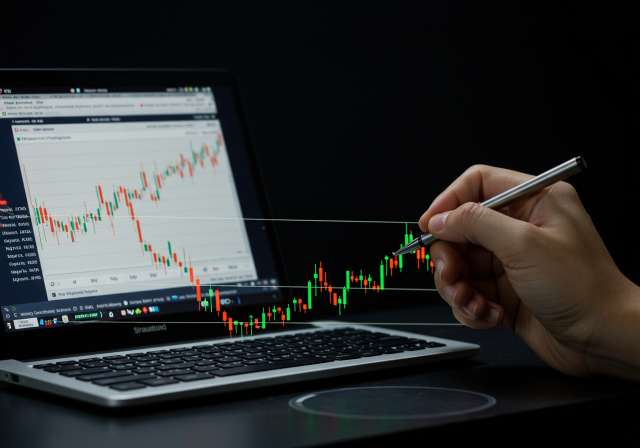
Unlock potential profits with the best futures trading app! Explore the world of derivatives, indices, and commodities on the NSE and BSE. Master futures & opti
Unlock potential profits with the best futures trading app! Explore the world of derivatives, indices, and commodities on the NSE and BSE. Master futures & options today!
Ace the Market: Choosing the Right Futures Trading App
Introduction: Riding the Derivatives Wave
The Indian financial market is a dynamic landscape, offering diverse investment avenues to both seasoned traders and newcomers. Among these, futures trading stands out as a powerful tool for potentially amplifying returns. However, navigating the complexities of futures and options (F&O) requires a robust platform, and that’s where a reliable futures trading app becomes indispensable. This comprehensive guide will walk you through everything you need to know to choose the right application for your trading needs, ensuring you can confidently participate in this exciting segment of the market.
Understanding Futures Trading in the Indian Context
Before diving into the specifics of choosing an app, it’s crucial to understand the fundamentals of futures trading in India. Futures contracts are agreements to buy or sell an asset at a predetermined price on a specific future date. These contracts are primarily traded on exchanges like the National Stock Exchange (NSE) and the Bombay Stock Exchange (BSE). They cover a wide array of underlying assets, including:
- Equity Indices: Such as Nifty 50 and Bank Nifty.
- Individual Stocks: Futures contracts on various listed companies.
- Commodities: Including gold, silver, crude oil, and agricultural products.
Trading futures involves significant risk due to leverage. While it offers the potential for high returns, it also carries the risk of substantial losses. Therefore, a thorough understanding of risk management principles is paramount before engaging in futures trading.
Key Features to Look for in a Futures Trading App
The market is flooded with various trading apps, each claiming to be the best. However, not all apps are created equal. Here’s a checklist of essential features you should consider when selecting a futures trading app:
1. User-Friendly Interface
A clean, intuitive interface is crucial for efficient trading. The app should be easy to navigate, allowing you to quickly access market data, place orders, and monitor your positions. Cluttered interfaces can lead to errors and missed opportunities, especially during volatile market conditions.
2. Real-Time Market Data
Access to real-time market data is non-negotiable. Delays in data can result in poor decision-making and significant financial losses. Ensure the app provides streaming quotes for indices, stocks, and commodities, along with depth of market (DOM) information.
3. Advanced Charting Tools
Technical analysis plays a vital role in futures trading. The app should offer a comprehensive suite of charting tools, including various indicators (e.g., moving averages, RSI, MACD), drawing tools, and customizable timeframes. This will enable you to identify trends, support and resistance levels, and potential entry and exit points.
4. Order Placement Options
Flexibility in order placement is essential. The app should support various order types, including:
- Market Orders: Executed immediately at the best available price.
- Limit Orders: Executed only at or better than a specified price.
- Stop-Loss Orders: Designed to limit potential losses.
- Bracket Orders: Combine a limit order and a stop-loss order to manage risk and lock in profits.
5. Risk Management Tools
Effective risk management is crucial for long-term success in futures trading. The app should offer features like:
- Margin Calculator: To determine the margin required for different positions.
- Stop-Loss Order Placement: As mentioned above, to limit potential losses.
- Position Tracking: To monitor your open positions and potential profits/losses.
6. Security Features
Security is paramount when dealing with your financial assets. The app should employ robust security measures, including:
- Two-Factor Authentication (2FA): For enhanced login security.
- Data Encryption: To protect your personal and financial information.
- Regular Security Audits: To identify and address potential vulnerabilities.
7. News and Analysis
Staying informed about market developments is crucial for making informed trading decisions. The app should provide access to real-time news feeds, market analysis reports, and expert opinions.
8. Customer Support
Responsive and reliable customer support is essential, especially when you encounter technical issues or have questions about the app’s features. The app provider should offer multiple channels for support, such as phone, email, and live chat.
9. Brokerage and Fees
Brokerage charges and other fees can significantly impact your profitability. Compare the fee structures of different app providers and choose one that offers competitive rates without compromising on service quality. Also, be aware of hidden charges such as account maintenance fees or inactivity fees.
10. Regulatory Compliance
Ensure that the app provider is a registered member of the NSE and BSE and complies with all regulations set forth by the Securities and Exchange Board of India (SEBI). This will provide you with a degree of protection in case of any disputes or fraudulent activities.
Top Futures Trading Apps in India (Illustrative Examples)
While a comprehensive list is beyond the scope of this article, here are some well-regarded apps in the Indian market, illustrating the features discussed above. Remember to conduct your own research and compare apps based on your individual needs and preferences:
- Zerodha Kite: Known for its user-friendly interface and low brokerage fees.
- Upstox Pro: Offers advanced charting tools and a wide range of features.
- Angel One: Provides research reports and advisory services in addition to trading functionality.
- Groww: Popular for its simple interface and ease of use, especially for beginners.
Disclaimer: This is not an exhaustive list, and the inclusion of these examples does not constitute an endorsement. Always do your own due diligence before choosing a trading app.
Beyond the App: Essential Considerations for Futures Trading Success
Choosing the right app is only one piece of the puzzle. To succeed in futures trading, you also need to:
1. Develop a Solid Trading Strategy
A well-defined trading strategy is crucial for consistent profitability. This strategy should include:
- Clear entry and exit rules: Based on technical or fundamental analysis.
- Risk management parameters: To limit potential losses.
- Position sizing: To determine the appropriate amount of capital to allocate to each trade.
2. Practice with a Demo Account
Before risking real money, practice your trading strategy using a demo account. Most reputable app providers offer demo accounts with virtual funds, allowing you to familiarize yourself with the platform and test your strategies without any financial risk.
3. Stay Updated on Market News
Keep abreast of market news and economic developments that could impact the prices of your chosen assets. This includes:
- Economic indicators: Such as GDP growth, inflation rates, and interest rate decisions.
- Corporate earnings reports: For individual stocks.
- Geopolitical events: That could affect commodity prices.
4. Manage Your Emotions
Emotions can be your worst enemy in trading. Fear and greed can lead to impulsive decisions that can wipe out your profits. Develop a disciplined approach to trading and stick to your pre-defined strategy, regardless of your emotions.
5. Continuous Learning
The financial markets are constantly evolving, so it’s important to continuously learn and adapt. Stay updated on new trading strategies, technical indicators, and risk management techniques. Consider attending webinars, reading books, and following reputable financial analysts.
Futures Trading vs. Other Investment Options
It’s crucial to understand how futures trading stacks up against other popular investment avenues available to Indian investors. Here’s a brief comparison:
Futures Trading vs. Equity Investing
Equity investing involves buying and holding shares of companies, aiming for long-term capital appreciation. Futures trading, on the other hand, is a short-term, leveraged strategy that focuses on profiting from price movements. Equity investing is generally considered less risky than futures trading, but it also offers potentially lower returns. Investing in equity mutual funds or through Systematic Investment Plans (SIPs) offers diversification and professional management, mitigating some of the risks associated with direct equity investing.
Futures Trading vs. Mutual Funds
Mutual funds pool money from multiple investors to invest in a diversified portfolio of stocks, bonds, or other assets. Mutual funds are managed by professional fund managers and offer a convenient way to invest in the market without having to actively manage your own portfolio. Equity Linked Savings Schemes (ELSS) mutual funds also offer tax benefits under Section 80C of the Income Tax Act. Futures trading requires active management and carries significantly higher risk than investing in mutual funds.
Futures Trading vs. Public Provident Fund (PPF) and National Pension System (NPS)
PPF and NPS are long-term savings schemes designed for retirement planning. PPF offers a fixed interest rate and tax benefits, while NPS allows you to invest in a mix of equity and debt funds. These schemes are generally considered very safe and offer stable returns over the long term. Futures trading is a speculative activity that is not suitable for retirement savings.
Conclusion: Empowering Your Trading Journey
Choosing the right futures trading app is a crucial step towards achieving your financial goals in the derivatives market. By carefully considering the features discussed in this guide and prioritizing security, reliability, and user-friendliness, you can equip yourself with the tools you need to navigate the complexities of futures trading with confidence. However, remember that a good app is just one element of success. Combining a powerful platform with a solid trading strategy, disciplined risk management, and continuous learning will significantly increase your chances of achieving your financial objectives in the dynamic world of futures and options trading on the NSE and BSE.
Leave a Reply