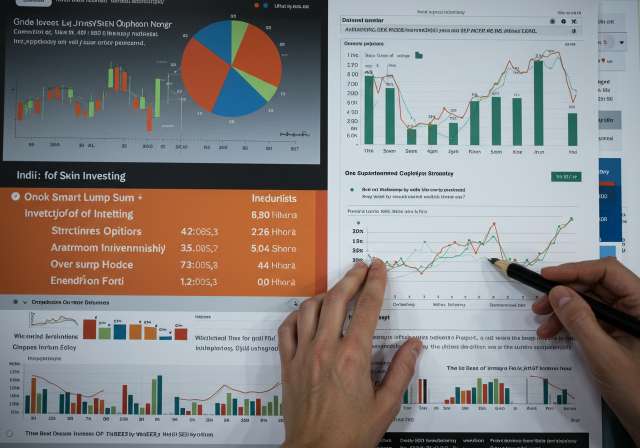
Looking for the best trading account in India? Explore a comprehensive guide to help you choose the right Demat and trading account, considering brokerage, feat
Looking for the best trading account in india? Explore a comprehensive guide to help you choose the right Demat and trading account, considering brokerage, features, and more. Start investing wisely!
Find Your Edge: Choosing the Best Trading Account in India
Introduction: Navigating the Indian Stock Market Landscape
The Indian stock market, encompassing both the National Stock Exchange (NSE) and the Bombay Stock Exchange (BSE), offers a plethora of opportunities for investors seeking to grow their wealth. However, to participate effectively, you need a reliable trading account. Choosing the right account is crucial, as it impacts your trading costs, investment options, and overall experience. This guide will walk you through the essential aspects of selecting the optimal trading account for your needs, considering factors relevant to the Indian financial market.
Understanding the Basics: Demat and Trading Accounts
Before diving into the specifics, let’s clarify the difference between a Demat account and a trading account:
- Demat Account (Dematerialization Account): This account holds your shares and other securities in electronic form. It’s like a digital locker for your investments, governed by depositories like NSDL and CDSL.
- Trading Account: This account facilitates the buying and selling of securities on the stock exchanges (NSE & BSE). It acts as an intermediary between your bank account and the stock market.
Typically, brokers offer a combined Demat and trading account for seamless trading. When you buy shares, they are credited to your Demat account, and when you sell, they are debited.
Key Factors to Consider When Choosing a Trading Account
Selecting the “best trading account in india” depends heavily on individual needs and investment style. Here are the critical factors to evaluate:
1. Brokerage Charges: The Cost of Trading
Brokerage fees significantly impact your profitability, especially for frequent traders. There are primarily two types of brokerage models:
- Percentage-Based Brokerage: The broker charges a percentage of the transaction value (e.g., 0.05% per trade). This model was traditionally common, but it can be expensive for high-volume traders.
- Flat-Fee Brokerage: The broker charges a fixed fee per trade, regardless of the transaction size (e.g., ₹20 per trade). This is often more cost-effective for active traders.
Carefully compare brokerage charges across different brokers and choose the model that aligns with your trading frequency and volume. Several discount brokers in India offer competitive flat-fee plans, significantly reducing trading costs.
2. Account Opening and Maintenance Charges: Hidden Costs
Be aware of account opening fees and annual maintenance charges (AMC) for both Demat and trading accounts. Some brokers offer zero account opening fees or free Demat accounts as promotional offers. However, always check the AMC, which can range from ₹300 to ₹1000 per year. Look for brokers offering lifetime AMC or waiving it under certain conditions.
3. Trading Platforms and Technology: User Experience Matters
A user-friendly and reliable trading platform is essential for seamless execution. Consider the following:
- Platform Availability: Does the broker offer web-based platforms, mobile apps (iOS and Android), and desktop applications? Choose platforms compatible with your preferred devices.
- User Interface: Is the platform intuitive and easy to navigate? A clean and well-organized interface can significantly improve your trading experience.
- Charting Tools and Analytics: Does the platform offer advanced charting tools, technical indicators, and real-time market data? These features are crucial for informed decision-making, especially for technical analysts.
- Order Types: Does the platform support various order types, such as market orders, limit orders, stop-loss orders, and bracket orders? Having access to diverse order types allows you to manage risk and execute trades strategically.
4. Investment Options: Beyond Equity
Consider the range of investment options offered by the broker. Do you want to invest only in equity, or do you also want access to other asset classes like:
- Mutual Funds: The ability to invest in mutual funds directly through the trading platform can be convenient. Some brokers offer commission-free direct mutual fund investments.
- Initial Public Offerings (IPOs): Ensure the broker facilitates IPO applications.
- Futures and Options (F&O): If you’re interested in derivatives trading, ensure the broker offers F&O trading capabilities with adequate margin requirements.
- Commodities: Some brokers also offer commodity trading through platforms like MCX.
- Currency Derivatives: Trading in currency derivatives (USD/INR, EUR/INR, etc.) might also be of interest.
5. Research and Advisory Services: Guidance for Beginners
If you’re a beginner investor, consider brokers who offer research reports, market analysis, and investment recommendations. However, remember that these are just suggestions, and you should always conduct your own due diligence before making any investment decisions. Be wary of brokers pushing specific stocks or schemes without proper justification. SEBI regulates research analysts, so ensure your broker’s research team is compliant.
6. Customer Support: A Reliable Safety Net
Efficient and responsive customer support is crucial, especially when dealing with technical issues or account-related queries. Check the broker’s customer support channels (phone, email, chat) and their responsiveness. Look for brokers with 24/7 support or dedicated relationship managers.
7. Margin and Leverage: Handle with Caution
Margin trading allows you to trade with borrowed funds, amplifying your potential profits and losses. While leverage can increase your returns, it also significantly increases your risk. Be cautious when using margin and understand the associated risks before engaging in leveraged trading. SEBI has specific regulations regarding margin requirements for different asset classes.
8. Security and Reliability: Protecting Your Investments
Ensure the broker has robust security measures to protect your account and personal information. Look for features like two-factor authentication (2FA), encryption, and regular security audits. Choose brokers who are members of reputable exchanges (NSE and BSE) and regulated by SEBI.
Popular Trading Account Providers in India
Several reputable brokers in India offer competitive trading accounts. Here are a few examples (note that this is not an exhaustive list and is for illustrative purposes only):
- Zerodha: Known for its discount brokerage model and user-friendly platform, Kite.
- Upstox: Another popular discount broker offering competitive brokerage rates and a mobile-first trading experience.
- Angel One: A full-service broker offering a range of investment options and research services.
- ICICI Direct: A popular bank-based broker offering integrated banking and trading services.
- HDFC Securities: Another bank-based broker offering similar services to ICICI Direct.
Research and compare the offerings of different brokers to find the one that best suits your needs. Read reviews and testimonials from other investors before making a decision.
Tax Implications of Trading in India
Understanding the tax implications of trading is crucial for effective financial planning. Here’s a brief overview:
- Short-Term Capital Gains (STCG): Gains from the sale of equity shares held for less than 12 months are taxed at 15% (plus applicable cess).
- Long-Term Capital Gains (LTCG): Gains from the sale of equity shares held for more than 12 months are taxed at 10% (plus applicable cess) on gains exceeding ₹1 lakh in a financial year.
- Intraday Trading: Profits from intraday trading are considered speculative business income and are taxed according to your income tax slab.
- Futures and Options (F&O): Profits from F&O trading are also considered non-speculative business income and are taxed according to your income tax slab.
Consult with a tax advisor to understand the specific tax implications of your trading activities.
Alternative Investment Options: Beyond Direct Equity
While a trading account primarily facilitates direct equity investments, consider these alternative investment options available in India:
- Mutual Funds: Invest in diversified portfolios managed by professional fund managers. Options include equity funds, debt funds, hybrid funds, and more. Systematic Investment Plans (SIPs) allow you to invest regularly in mutual funds with small amounts.
- Public Provident Fund (PPF): A government-backed savings scheme offering tax benefits and guaranteed returns.
- National Pension System (NPS): A retirement savings scheme offering tax benefits and investment options across equity, debt, and government securities.
- Equity Linked Savings Scheme (ELSS): A type of equity mutual fund that offers tax benefits under Section 80C of the Income Tax Act.
- Sovereign Gold Bonds (SGBs): Government-backed bonds denominated in gold, offering a safe and convenient way to invest in gold.
Conclusion: Making an Informed Decision
Choosing the right trading account is a crucial step towards successful investing in the Indian stock market. Carefully evaluate your needs, compare the offerings of different brokers, and consider factors like brokerage charges, platform features, customer support, and security. Remember that the “best trading account in india” is the one that best aligns with your individual investment goals and risk tolerance. By making an informed decision, you can set yourself up for a rewarding investment journey.
Leave a Reply