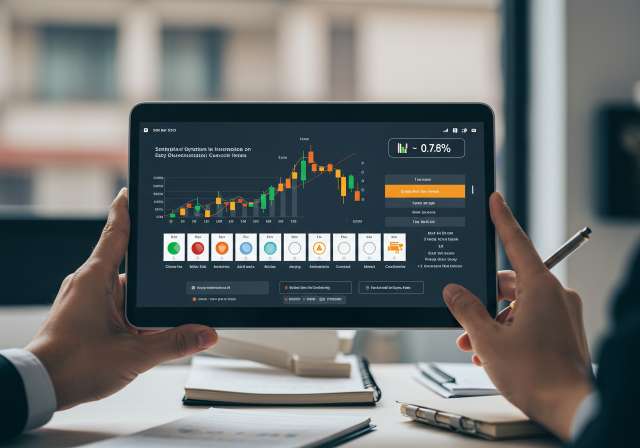
Confused about which broker to choose? Our stock broker compare guide simplifies the process! Find the best Demat account and trading platform for your investme
Confused about which broker to choose? Our stock broker compare guide simplifies the process! Find the best Demat account and trading platform for your investment journey. Explore brokerage charges, features & more!
Stock Broker Comparison: Find the Right Fit For You
Introduction: Navigating the Indian Stock Market Landscape
Investing in the Indian stock market can be a rewarding journey, offering the potential for significant wealth creation. The Securities and Exchange Board of India (SEBI) regulates the Indian stock market, ensuring transparency and investor protection. Whether you’re a seasoned trader or just starting your investment journey with small SIPs in equity mutual funds, choosing the right stock broker is crucial. Your broker acts as your gateway to the National Stock Exchange (NSE) and the Bombay Stock Exchange (BSE), facilitating your buy and sell orders. But with a plethora of options available, from traditional full-service brokers to discount brokers, the decision can feel overwhelming. This guide aims to simplify the process, helping you make an informed choice that aligns with your investment goals and risk tolerance.
Understanding Different Types of Stock Brokers in India
Before diving into a detailed comparison, it’s essential to understand the different types of stock brokers operating in India. These can be broadly categorized into two main groups:
1. Full-Service Brokers: The Traditional Approach
Full-service brokers provide a comprehensive suite of services, including:
- Investment Advice: They offer personalized investment recommendations based on your financial goals and risk profile. This can include advice on equity investments, mutual funds, bonds, and other asset classes.
- Research Reports: Access to in-depth research reports on companies, industries, and the overall market. These reports can help you make informed investment decisions.
- Relationship Manager: A dedicated relationship manager to assist you with your account and address your queries.
- Wealth Management Services: Some full-service brokers also offer wealth management services, including financial planning and portfolio management.
Example: HDFC Securities, ICICI Direct, Kotak Securities.
Pros: Personalized advice, comprehensive research, dedicated support.
Cons: Higher brokerage fees compared to discount brokers.
2. Discount Brokers: The Cost-Effective Option
Discount brokers offer a more streamlined service, focusing primarily on order execution. They typically provide:
- Online Trading Platform: A user-friendly online platform for placing buy and sell orders.
- Basic Research Tools: Some basic research tools, such as market data and charting tools.
- Lower Brokerage Fees: Significantly lower brokerage fees compared to full-service brokers, often charging a flat fee per trade or a percentage of the transaction value.
Example: Zerodha, Upstox, Angel One.
Pros: Lower brokerage fees, suitable for experienced investors who don’t need extensive research or advice.
Cons: Limited research and advisory services, may lack personalized support.
Key Factors to Consider When Choosing a Stock Broker
Choosing the right stock broker involves careful consideration of several factors. Here’s a breakdown of the most important aspects to evaluate:
1. Brokerage Charges: Understanding the Costs
Brokerage charges are the fees you pay to your broker for facilitating your trades. It’s crucial to understand the different types of brokerage plans available and choose one that aligns with your trading frequency and volume. Common brokerage models include:
- Percentage-Based Brokerage: A percentage of the transaction value is charged as brokerage. This is common among full-service brokers.
- Flat-Fee Brokerage: A fixed fee is charged per trade, regardless of the transaction value. This is typical of discount brokers.
- Subscription-Based Brokerage: A fixed monthly or annual fee is charged for unlimited trading.
Example: A full-service broker might charge 0.3% brokerage on equity delivery trades, while a discount broker might charge a flat ₹20 per trade.
2. Trading Platform and User Experience
The trading platform is your primary interface for interacting with the stock market. A user-friendly and intuitive platform is essential for efficient trading. Key features to look for include:
- Ease of Use: A simple and intuitive interface that is easy to navigate.
- Advanced Charting Tools: Comprehensive charting tools for technical analysis.
- Real-Time Market Data: Access to real-time market data to make informed decisions.
- Mobile App: A mobile app for trading on the go.
- Order Placement Options: Various order types, such as market orders, limit orders, and stop-loss orders.
3. Research and Advisory Services
If you’re looking for investment advice and research reports, consider a full-service broker. Evaluate the quality and relevance of their research reports. Do they cover the stocks and sectors you are interested in? Do their recommendations align with your investment goals and risk tolerance?
4. Account Opening and Maintenance Charges
In addition to brokerage charges, you’ll also need to consider account opening and maintenance charges. Some brokers offer free Demat account opening, while others charge a fee. Annual maintenance charges (AMC) are typically levied on your Demat account.
5. Customer Support
Reliable customer support is crucial, especially if you’re new to investing. Check the broker’s customer support channels (phone, email, chat) and their response time. Read online reviews to get an idea of their customer service quality.
6. Investment Options
Does the broker offer access to the investment options you’re interested in? This could include equity shares, mutual funds (including ELSS for tax saving), derivatives, IPOs, bonds, and ETFs. Some brokers also offer access to international markets.
7. Margin and Leverage
Margin trading allows you to trade with borrowed funds. If you plan to use margin, understand the broker’s margin policies and interest rates. Be aware that margin trading can amplify both your profits and losses.
8. Security and Reliability
Ensure that the broker is SEBI registered and has a strong track record. Look for security features such as two-factor authentication and data encryption to protect your account and personal information.
Detailed Stock Broker Comparison Table (Illustrative Example)
To illustrate the process of stock broker compare, let’s consider a simplified comparison table (this is for illustrative purposes only, and you should conduct your own research):
| Broker | Type | Brokerage (Equity Delivery) | Account Opening Charges | AMC | Trading Platform | Research & Advisory |
|---|---|---|---|---|---|---|
| Zerodha | Discount | ₹20 per trade or 0.03% (whichever is lower) | ₹200 | ₹300 per year | Kite (web and mobile) | Limited |
| HDFC Securities | Full-Service | 0.3% | ₹0 (Limited Time Offer) | ₹750 per year | HDFC Securities Trading Platform | Comprehensive |
| Upstox | Discount | ₹20 per trade or 0.05% (whichever is lower) | ₹0 (Limited Time Offer) | ₹250 per year | Upstox Pro (web and mobile) | Limited |
Disclaimer: This table is for illustrative purposes only. Brokerage charges and other fees are subject to change. Always refer to the broker’s official website for the most up-to-date information.
Beyond Equity: Other Investment Options Through Your Broker
Your stock broker is not just for trading equity shares. Most brokers offer access to a wide range of investment options to diversify your portfolio and achieve your financial goals. Some common options include:
- Mutual Funds: Invest in a diversified portfolio of stocks, bonds, or other assets through mutual funds. SIPs (Systematic Investment Plans) allow you to invest a fixed amount regularly.
- Initial Public Offerings (IPOs): Apply for shares in companies that are going public.
- Bonds: Invest in government or corporate bonds for fixed income.
- Exchange-Traded Funds (ETFs): Invest in a basket of stocks that track a specific index, sector, or commodity.
- Derivatives: Trade futures and options contracts. (Requires a thorough understanding of the risks involved.)
- National Pension System (NPS): Invest in the NPS for retirement savings and tax benefits.
- Public Provident Fund (PPF): A popular long-term savings scheme with tax benefits. (Typically not offered directly by brokers, but often linked to banking services they may partner with.)
Tips for Making the Right Choice
Here are some final tips to help you choose the right stock broker:
- Define Your Investment Goals: What are you hoping to achieve through investing? Are you saving for retirement, a down payment on a house, or another goal?
- Assess Your Risk Tolerance: How much risk are you comfortable taking? Are you a conservative investor or a more aggressive investor?
- Compare Multiple Brokers: Don’t settle for the first broker you come across. Compare at least three to four brokers before making a decision.
- Read Online Reviews: See what other investors have to say about their experiences with different brokers.
- Start Small: Once you’ve chosen a broker, start with a small amount of capital and gradually increase your investment as you become more comfortable.
- Regularly Review Your Portfolio: Monitor your investments regularly and make adjustments as needed to stay on track to meet your goals.
Conclusion: Empowering Your Investment Journey
Choosing the right stock broker is a critical step in your investment journey. By carefully considering the factors discussed in this guide and conducting thorough research, you can find a broker that meets your needs and helps you achieve your financial goals. Remember to stay informed about market trends, diversify your portfolio, and invest for the long term. Good luck, and happy investing!
Leave a Reply