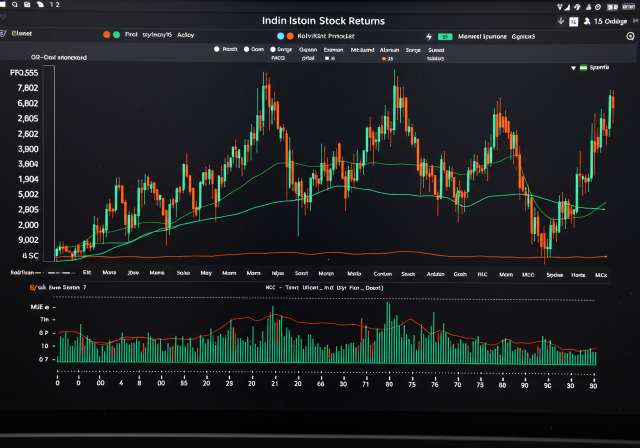
Looking for the best stock broker in India? Navigate the Indian stock market with ease! Find the perfect platform for your trading & investment journey. Compare
Looking for the best stock broker in India? Navigate the Indian stock market with ease! Find the perfect platform for your trading & investment journey. Compare brokerage fees, features, and customer support to make an informed decision and maximize your returns on NSE & BSE.
Choosing Your Champion: A Guide to Finding the Best Stock Broker in India
Introduction: Your Gateway to the Indian Stock Market
The Indian stock market, with the venerable Bombay Stock Exchange (BSE) and the dynamic National Stock Exchange (NSE), presents a wealth of opportunities for investors seeking to grow their wealth. However, navigating this complex landscape requires a reliable and efficient intermediary: a stock broker. With a plethora of options available, choosing the right one can seem daunting. This guide aims to equip you with the knowledge and tools necessary to identify the ideal brokerage partner for your investment journey, aligning with your financial goals and risk appetite.
Understanding Your Investment Needs
Before diving into the specifics of different stock brokers, it’s crucial to define your individual investment needs and preferences. Ask yourself these key questions:
- What is your investment style? Are you a long-term investor focusing on fundamentally sound companies, a short-term trader capitalizing on market fluctuations, or a hybrid investor combining both approaches?
- What types of instruments do you plan to trade? Will you primarily invest in equity shares, or do you also want access to derivatives (futures and options), commodities, currency trading, or even international stocks?
- What is your trading frequency? Do you anticipate making frequent trades, or will you primarily buy and hold investments?
- What is your budget for brokerage fees? Are you comfortable paying a higher brokerage fee for premium services, or are you primarily looking for the most cost-effective option?
- Do you require advanced trading tools and research reports? Are you comfortable relying on your own analysis, or do you need access to professional research and recommendations?
- What level of customer support do you need? Do you prefer phone support, email support, or online chat support?
Types of Stock Brokers in India
Indian stock brokers can be broadly categorized into two main types:
Full-Service Brokers
Full-service brokers offer a comprehensive suite of services, including:
- Personalized investment advice: Dedicated relationship managers provide tailored recommendations based on your financial goals and risk profile.
- Research reports: Access to in-depth market analysis, company valuations, and investment recommendations.
- Wealth management services: Assistance with portfolio construction, financial planning, and tax optimization.
- Offline trading: Ability to place orders through phone or in-person branches.
Examples of full-service brokers include traditional brokerage houses like ICICI Direct, HDFC Securities, and Kotak Securities. While offering a higher level of service, they typically charge higher brokerage fees compared to discount brokers.
Discount Brokers
Discount brokers focus on providing a low-cost trading platform, primarily catering to self-directed investors. Their key features include:
- Lower brokerage fees: Significantly reduced brokerage charges compared to full-service brokers. Often offer flat-fee or percentage-based brokerage models.
- Online trading platforms: User-friendly web and mobile platforms for placing orders and tracking investments.
- Limited research and advisory services: Typically offer basic research reports and tools, but lack personalized investment advice.
Popular discount brokers in India include Zerodha, Upstox, and Groww. They are a suitable choice for experienced investors who are comfortable conducting their own research and managing their own portfolios.
Key Factors to Consider When Choosing a Stock Broker
Selecting the right stock broker is a critical decision that can significantly impact your investment success. Here’s a detailed look at the key factors to consider:
Brokerage Fees and Charges
Brokerage fees are the primary cost associated with trading stocks. Understand the different brokerage models offered by each broker:
- Percentage-based brokerage: A percentage of the transaction value is charged as brokerage.
- Flat-fee brokerage: A fixed fee is charged per trade, regardless of the transaction value.
- Subscription-based brokerage: A monthly or annual subscription fee provides access to unlimited trading.
In addition to brokerage fees, be aware of other charges such as:
- Securities Transaction Tax (STT): A government tax levied on transactions in the stock market.
- Stamp duty: A tax levied by state governments on the transfer of securities.
- SEBI turnover fees: Fees charged by the Securities and Exchange Board of India (SEBI).
- Exchange transaction charges: Fees charged by the stock exchanges (NSE and BSE).
- Depository Participant (DP) charges: Charges levied by the depository participant for maintaining your Demat account.
Carefully compare the total cost of trading across different brokers, considering your trading frequency and transaction size.
Trading Platform and Technology
The trading platform is your primary interface with the stock market. Look for a platform that is:
- User-friendly: Easy to navigate and understand, with a clear and intuitive interface.
- Reliable: Stable and responsive, with minimal downtime.
- Feature-rich: Provides access to real-time market data, charting tools, technical indicators, and order management features.
- Mobile-friendly: Offers a mobile app for trading on the go.
Consider the availability of advanced trading tools such as:
- Algo trading: Automated trading based on pre-defined rules and algorithms.
- Direct Market Access (DMA): Direct access to the stock exchange order book.
- Advanced charting tools: Comprehensive charting capabilities with a wide range of technical indicators.
Research and Advisory Services
If you require assistance with investment decision-making, consider the research and advisory services offered by the broker. Look for:
- In-depth market analysis: Comprehensive research reports covering market trends, economic outlook, and industry analysis.
- Company valuations: Detailed analysis of individual companies, including financial ratios, growth prospects, and fair value estimates.
- Investment recommendations: Buy, sell, and hold recommendations based on the broker’s research.
- Personalized investment advice: Tailored recommendations from a dedicated relationship manager.
Evaluate the quality and objectivity of the research reports and recommendations before making any investment decisions. Remember that even the best stock broker’s advice should be considered alongside your own due diligence.
Customer Support
Responsive and helpful customer support is crucial, especially when you encounter technical issues or have questions about your account. Look for brokers that offer multiple channels of support, including:
- Phone support: Ability to speak to a customer service representative directly.
- Email support: Ability to submit inquiries and receive timely responses via email.
- Online chat support: Instant messaging support for quick resolution of queries.
Check the broker’s customer support hours and response times before opening an account.
Account Opening Process
The account opening process should be straightforward and hassle-free. Look for brokers that offer:
- Online account opening: Ability to open an account entirely online, without the need for physical paperwork.
- Quick account activation: Fast account activation after completing the necessary verification procedures.
- Clear and transparent documentation: Easy-to-understand terms and conditions.
Ensure that the broker is SEBI-registered and compliant with all relevant regulations.
Demat Account Integration
A Demat account is essential for holding shares in electronic form. Ensure that the broker offers a seamless integration with a reliable Depository Participant (DP), such as CDSL or NSDL. Understand the DP charges associated with your Demat account.
Beyond Stocks: Exploring Other Investment Options
While equities are a popular investment choice, remember that diversification is key to managing risk. Consider exploring other investment options offered by stock brokers in India:
- Mutual Funds: Invest in a diversified portfolio of stocks, bonds, or other assets through professionally managed mutual funds. Consider Systematic Investment Plans (SIPs) for regular investments.
- Initial Public Offerings (IPOs): Apply for shares in newly listed companies through the IPO process.
- Derivatives (Futures and Options): Trade in futures and options contracts to hedge risk or speculate on market movements. This is a higher-risk strategy suitable for experienced traders.
- Commodities: Invest in commodities such as gold, silver, and crude oil through commodity exchanges.
- Currency Trading: Trade in currency pairs on the forex market.
- Exchange Traded Funds (ETFs): Invest in a basket of assets that track a specific index or sector.
- Sovereign Gold Bonds (SGBs): Invest in gold in paper form, earning interest and avoiding storage costs.
Tax Implications of Investing
Be aware of the tax implications of your investments. Equity investments are subject to capital gains tax, which varies depending on the holding period:
- Short-Term Capital Gains (STCG): Gains on investments held for less than one year are taxed at 15%.
- Long-Term Capital Gains (LTCG): Gains on investments held for more than one year are taxed at 10% on gains exceeding ₹1 lakh in a financial year.
Consider tax-saving investment options such as:
- Equity Linked Savings Scheme (ELSS) Mutual Funds: Invest in equity funds that offer tax deductions under Section 80C of the Income Tax Act.
- Public Provident Fund (PPF): A government-backed savings scheme that offers tax benefits and attractive interest rates.
- National Pension System (NPS): A retirement savings scheme that offers tax benefits and allows you to invest in a mix of equity, debt, and government securities.
Consult a financial advisor for personalized tax planning advice.
Conclusion: Empowering Your Investment Journey
Choosing the right stock broker is a crucial step towards achieving your financial goals. By carefully considering your individual investment needs, comparing different brokers, and understanding the associated fees and charges, you can find a brokerage partner that empowers you to navigate the Indian stock market with confidence and success. Remember to stay informed, diversify your investments, and consult a financial advisor when needed. Happy investing!